
Blog
These blogs are my reflections, thoughts and curiosities written on a page. Sometimes seeing our thoughts visually allows us to experience them differently or in a more embodied way. It's about getting the thoughts out of our heads so we can be clear to focus on our day, finally sleep, come to an insight, or decide to move forward. To me, writing is a mirror and a form of meditation. As such, the views in these articles may change as I grow and learn through life experiences. May these blogs bring clarity in the storms to anyone who needs it.
Subscribe to my free Substack to be notified of my next post.
I work organically, so there is no schedule or set timeline for these posts.
Building capacity for change
Nature is cyclical; it is in constant flux. So are we. How do we build this capacity to keep embracing change instead of freezing, withdrawing or resisting?
As I found myself immersed in the process of this blog, I didn’t realize how deep, vast and powerful this one word “change” would be, nor how many layers it could contain. I find myself in the spring season where I live. The frozen landscape is slowly thawing, both flora and fauna are starting to move and break through the ice crust that had been cherished as insulation against the cold of winter. So what is it that pushes all this life to come back? Is it food? Daylight? Temperature? Can we agree that multiple factors are known to entice this change of rhythm. So then how do larger ecosystems change? Unless a catastrophic environmental disaster strikes and forces change on a larger magnitude, change usually happens slowly and builds gradually. We can see this in Primary and Secondary regeneration of forest ecosystems. We can see this in the slow ecological transformation of diversity and habitat quality through predator-prey dynamics or in the introduction of invasive species. A great example of these ecosystem changes is Dan Egan's book: The Death and Life of the Great Lakes.
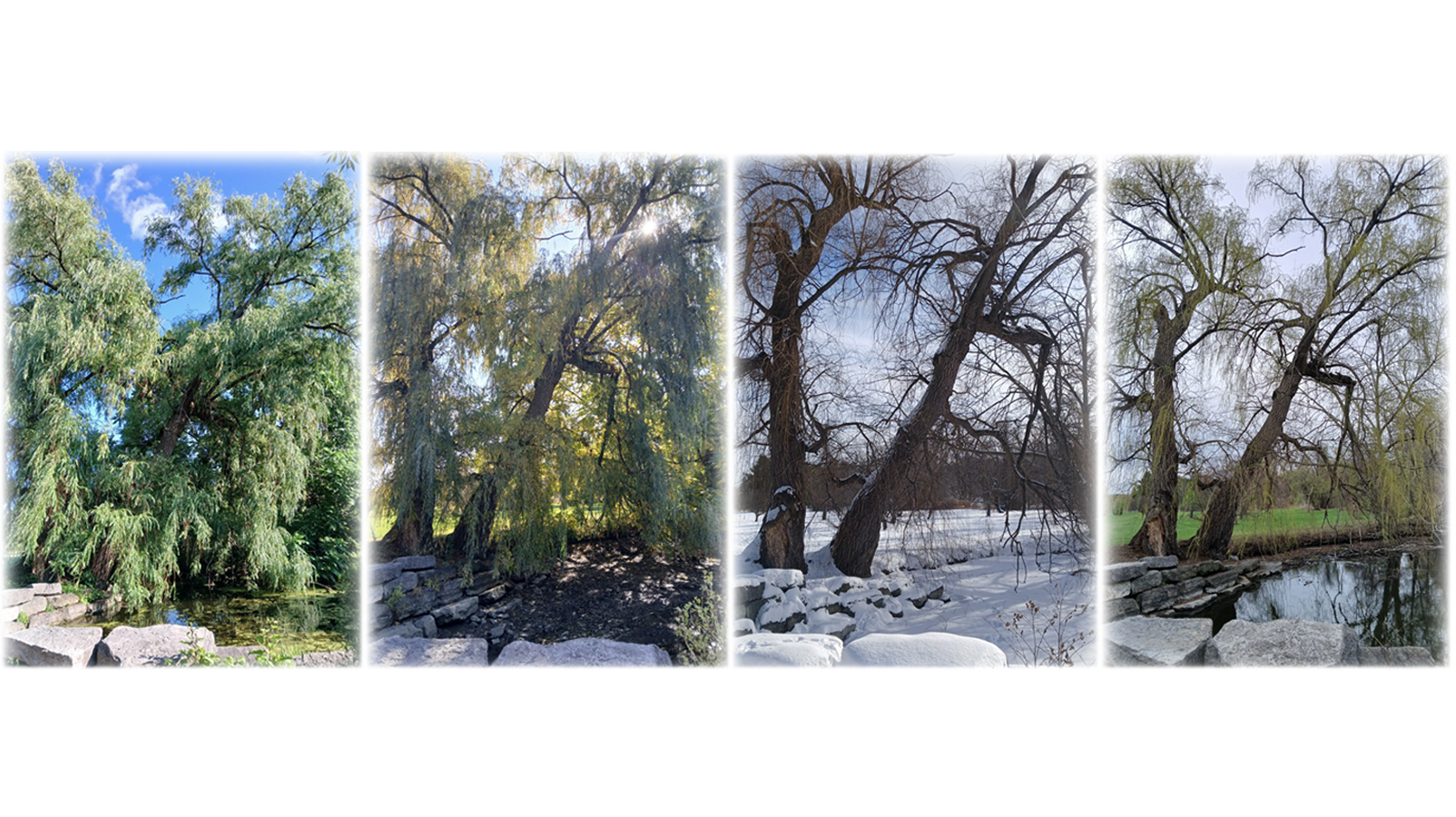
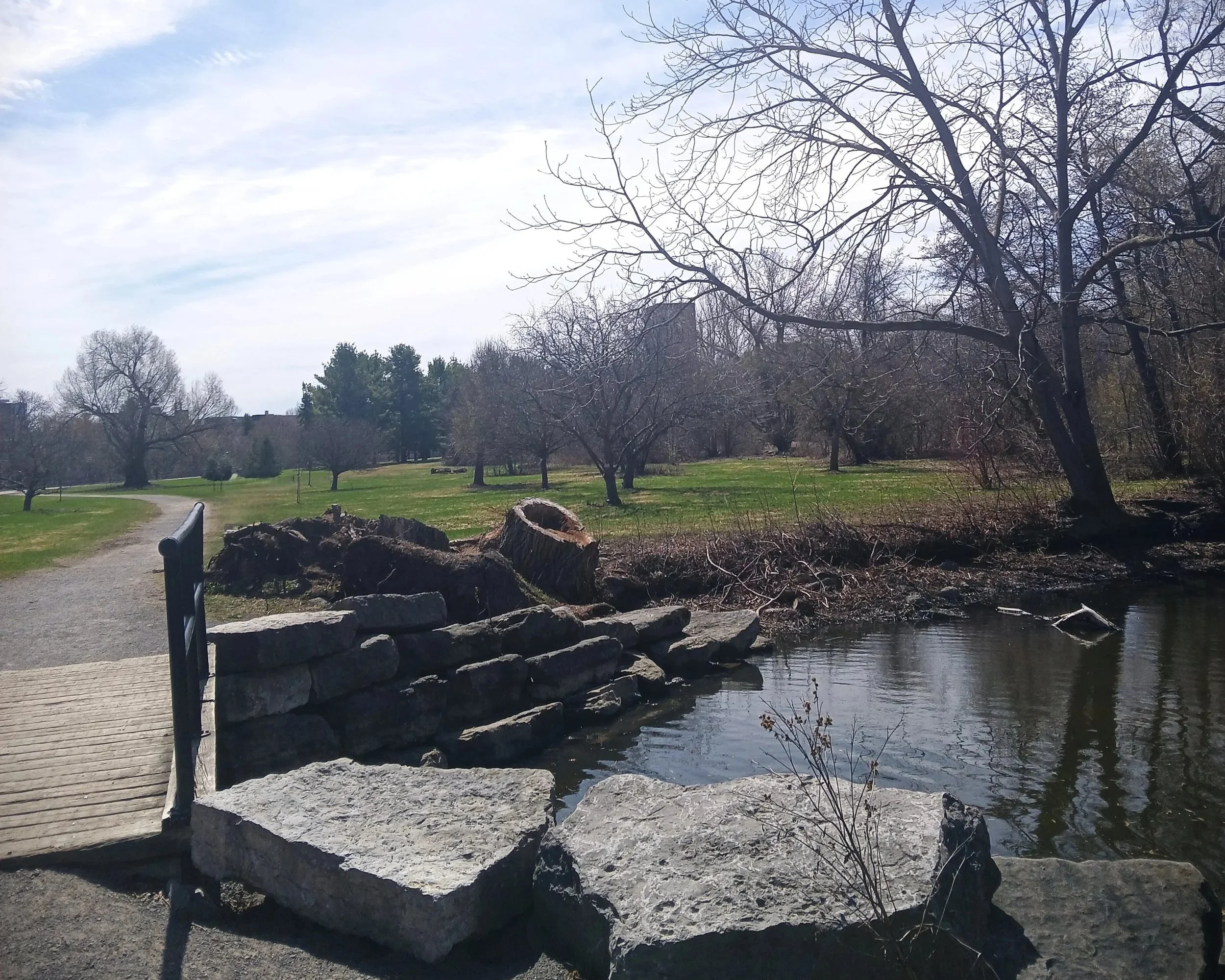
I’m using this analogy to nature and wildlife because I’ve been reflecting on the nuances and variances of individual responses to change. Looking at nature always provides me with answers, and I have so many questions to ponder on this topic of change. Multiple events occurred lately and stimulated insights for me, coinciding with the New Moon in Aries, which is the first sign of the zodiac wheel, symbolizing new beginnings and endeavors. The sister willows that I cherished and have depicted on my website for every season have been cut down. I was out for a walk to visit them after a long and cold winter and was confronted with a big hole in the landscape view. I’ve added a picture to show the contrast and emptiness a tree removal leaves, especially in open landscapes. Perhaps in a forest it's not as visually jarring because of the closeness of life all around. But this coincided with the writing of my blog on change. It was a visible change in the ecosystem that saddened me. Yet the symbolism pointed to a time for change again. For change as part of life, as the cyclical rhythm that governs life. These sister willows have inspired my path, but now it was time to pass the torch.
><)))’> What is our first response to change? <’(((><
For starters, let's acknowledge that some of us simply don’t like change while some of us are on a spectrum of being just okay to very comfortable with it, to absolutely needing it. This can also vary throughout phases of life. It occurred to me, through insight from dance, that in being able to just change direction, there needs to be a certain level of stability, of groundedness. In continuing with the dance analogy, a “ball change” allows for a quick and sharp transition to another move or foot position. It is a set-up position to allow for the next dance move. It's a grounding that anchors an opening. This opening, whether it's a change in direction or a full spin for example, can only happen through a stable foundation. So to come back from the analogy and bring it in the context of our everyday life, this can mean having a secure house; a safe relationship; a financial cushion, supportive friendships, etc, etc.
So I ask the following question: What is valued so deeply that it could anchor a stable progress and allow an opening to something new?
A second question would be: How could this value slow down the change process if it is no longer valid?
><)))’> How do we approach change? <’(((><
Do we tend to resist change or embrace it? Just acknowledging this can bring us so much insight. If we resist, then what is at the root of this resistance? What is needed to establish a stable foundation first? If we embrace change, are we steadfast? Or perhaps a bit reckless?
Does the manner in how we approach change affect our overall view of what change means for us? None of these questions are meant to be a black or white answer. It is about noticing where on the spectrum we fall. It is about awareness. Because from knowing where we stand in this present moment, we can slowly start to explore and take steps forward. But knowing whether we’re standing on concrete or sitting in a tree branch for example, will illuminate the next step that would be needed. These steps will vary for each and everyone of us.
Do we want to and can we just jump off the branch or do we need to slowly climb down? What are the factors involved?
If we’re standing on concrete, what’s surrounding the concrete? Is it an easy step forward or do we have injuries that could slow us down or even prevent us? What does our present scenario look like today?
><)))’> Where is change coming from? <’(((><
Is the drive for change inward or outward? How does this affect our response and our approach? Are we taking a pause to truly be with what is wanting to shift and how our body is responding?
As I kept coming back to this blog, I realized that “building capacity” for change is only the surface of a deeper inner change. When we build capacity, we are opening a door and inviting new perspectives. A wider lens perhaps. As much as change may, at times, appear sudden, change is really gradual. It's a building that has been happening, sometimes unseen, below the surface. This building of a sturdy ground, or a safety net, eventually becomes the launching pad from which we can symbolically push off. From this launching pad, we are moving. This movement can be forward or in a new direction or even a u-turn. The direction in this specific context is not important. What’s more important is the recognition of movement in itself.
I recognized that having a capacity for change comes from being open to diversity and possibilities. This ultimately comes from learning how to move. So sometimes, maybe we just need to move our bodies in different ways to allow for that change of routine. This might be a different activity, a new sport, dancing, yoga, etc, etc. Movement can shift and open new avenues that have become clogged or stuck.
><)))’> From fear, to curiosity, to creativity <’(((><
I’ve noticed my own tendency to view things through a spectrum when trying to assimilate and embody knowledge. In this context of change, the spectrum goes from fear on one side, to varying levels of curiosity, to creativity and adventure. While creativity and adventure fall on the same end of the spectrum, perhaps they are applicable in different contexts. Can leaning into curiosity reduce some of our fear? And can curiosity and wider exploration open us up to deeper creativity in our everyday lives? Ultimately, are these not all various forms of movement?
Astrology is a symbolic language that helps me conceptualize things. When I observe the stable, sturdy fixed signs (Taurus, Leo, Scorpio, Aquarius) that naturally precede the mutable signs (Gemini, Virgo, Sagittarius, Pisces) which invite movement and change, it becomes so clear to me. As symbolically represented in the zodiac wheel, the capacity to change has been harnessed in the fixed sign first. It's that safe space, or home or even just a bedroom to which you can always return to. It's where your guard can come down and your nervous system can breathe, no matter how far you venture out into new territory. The fixity of a sign shows up as the steadiness, the groundedness, the preservation, but also the resistance to change and stagnation. Where, then, is that nuanced space between the fixed and the mutable? How do we bring awareness to this duality?
As I’m coming full circle on these reflections, the word safety arises. The safety of our own space, the safety within our own bodies. So if we added more nuance to this spectrum by pairing Fear and Safety on one end and Creativity and Adventure on the other, what does that look like for you?
Perhaps, the quality of our inner safety directly reflects our openness to change?
Shift from drifting to flowing
How did you coast this past year? Were you drifting or flowing? Did you drift into a flow? Do you sense the visceral difference between these two verbs?
What's happening when we feel disconnected, adrift, hollow, drained, empty, stuck, or lacking belonging and connection?
This is nuanced and can feel overwhelming in today's social context. Times have changed and keep changing fast. Faster than we’re used to or than we can keep up with. My nervous system feels overloaded sometimes, how does yours feel?
How did you coast this past year? Were you drifting or flowing? Did you drift into a flow? Do you sense the visceral difference between these two verbs?
While reflecting on this, I recognized that authenticity would be a key player in discriminating between these states. Authenticity is present in a place of flowing. It is not present in the drifting. Drifting, in this context, is one-sided. There is no awareness, no conscious engagement. There is no direction and it might feel like floating on the water surface, letting the waves direct your body. For the purpose of this blog, I’m associating drifting with essentially losing yourself.
I noticed these two states were the extremes of a more nuanced spectrum. From being fully yourself on one end to losing yourself on the other. What's in between? And how do we navigate this in between current and choose to dance with life?
In this context of coaching and individual sovereignty, drifting misses the inner connection to our truth. It is letting ourselves be carried on the current of life and external circumstances. Drifting may feel like a need sometimes, from being so drained and tired. However, it is a clue for us to look within as we have drifted too far from ourselves, from our bodies and our values. Drifting misses definition. Yet, we need clarity and definition if and when we want to move forward.
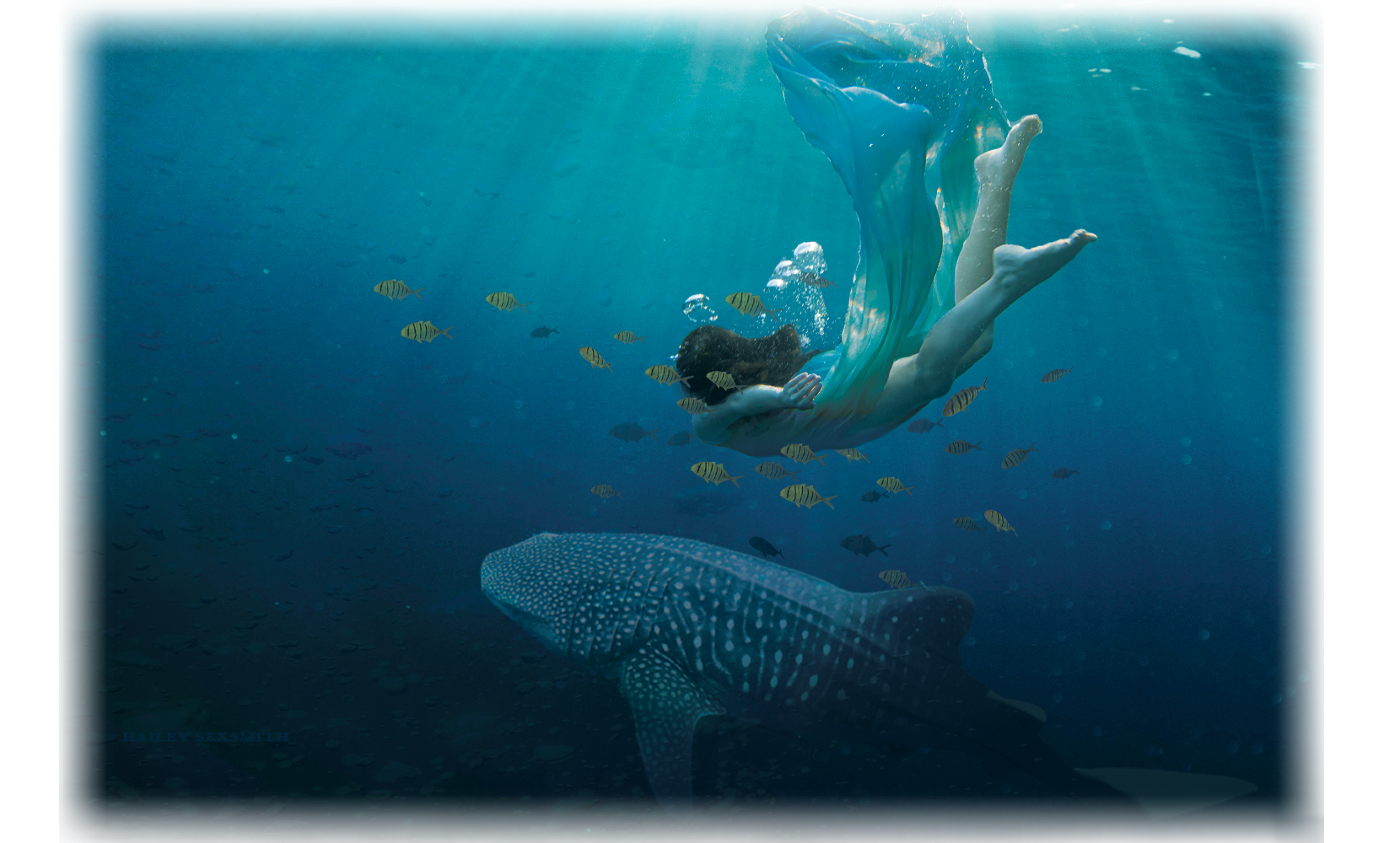
Sometimes, to drift is to be blindly following. Drifting is floating on the surface of the ocean whereas flowing is swimming in the ocean, merging with the water of life, engaged with all of the sea creatures submerged within. To swim we need to engage our limbs and be present to our movements. So flowing is participating with life. It's a dance. It's a give and take. It's an observation, a pause and a conscious response.
A flow is two-sided. There is an opening and a response. There is a conscious awareness that choices can be made to steer us in a specific direction. Flowing is embodied, it is grounded and aware.
So how do we navigate and dance between these extremes, because let’s be honest, we’re all human, we’re not perfect and our lives are not linear. We do encounter challenges to evolve and grow. These challenging transitions are essential for us to reevaluate where we stand, what we value, who we want to be and how we want to show up. These transitions are also when this field between drifting and flowing may become more conscious.
To understand the nuances in between, I dove deeper into discriminating between losing ourselves and releasing ourselves. It might seem subtle but this is where authenticity comes through. Releasing ourselves from something, whether a pattern, a situation or an interaction is a conscious choice. On the outside it can appear as drifting, through the disconnection and the changes rising to support becoming a better version of ourselves. The key difference here though is choice and authenticity. Being present, and making a choice in line with our values and beliefs shows that we are choosing to release ourselves instead of disconnecting, looking away and losing ourselves. Sometimes we need to go through circumstances to grow through them. Growing involves choosing to release ourselves and gaining perspective. Choosing to disconnect and lose ourselves however keeps us stagnant and drifting. How aware are we of this choice?
I recently learned a few words from nature that were pertinent in this current and that spoke clearly to a nuanced flow of releasing ourselves instead of losing ourselves: Fallowing and Tiding.
In agriculture, fallowing is the act of giving rest to the soil so it can rebuild and re fertilize itself. It's giving time for breathing and rebuilding. As much as the work might be ‘literally’ happening under the surface, it doesn't mean nothing is happening. Just because we can't physically see it, doesn't mean it's not happening. Some changes and opportunities need these microscopic adjustments to create the domino effect for growth and expansion.
The same goes for tiding. In marine biology, tiding speaks to the adaptation of wildlife and organisms to the rhythm of the tides. Low tide and high tide fluctuations are reflected in a circatidal rhythm (distinct from the 24hr circadian rhythm). So ‘riding the wave’ can save energy and it is an act of efficiency. Being in tune with timing and factors in our environment can open us up to see ideal times to move forward or times that can serve for preparation instead of pushing against a boulder. Along the ocean coast, the waves give an advantage to those wise enough to acknowledge and work with them instead of against them.
So the symbolic themes I noticed rising from these two words that can be reintegrated into our understanding of this nuanced current between drifting and flowing, are: rest and time.
How can we consciously choose to rest and observe, or observe and time our actions, so that we remain true to our core values and goals and remain in our integrity and authenticity without losing ourselves?
Do you sense the distinction between drifting vs resting and timing? This distinction takes time and self-honesty to integrate. So I will end with a quote that can encompass this blog and give us a starting point to align ourselves:
The German poet Johann Wolfgang von Goethe said, “As soon as you trust yourself, you will know how to live.”